

Extrusion Inline Quenching System
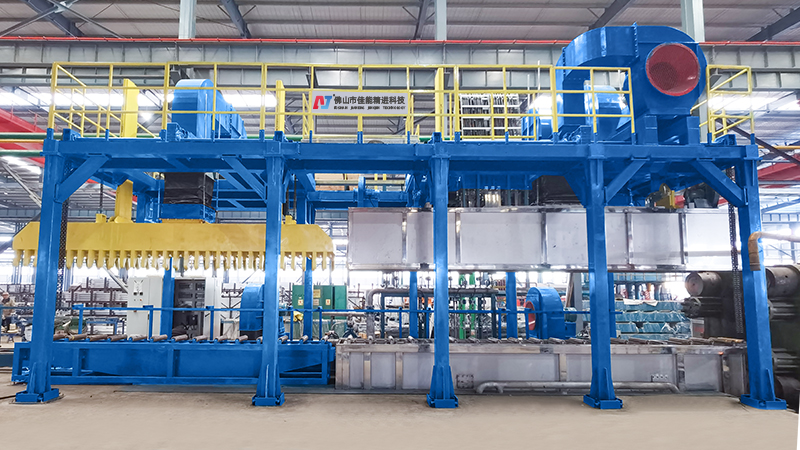
In traditional manufacturing models, aluminum profiles typically rely on slow offline quenching methods combined with manual aging. This conventional workflow demands massive capital investments in separate heating machinery, consumes excessive energy, and significantly prolongs the overall production cycle due to the redundant secondary heating phase.
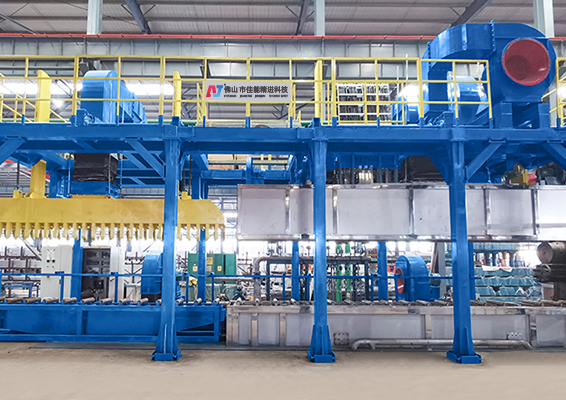
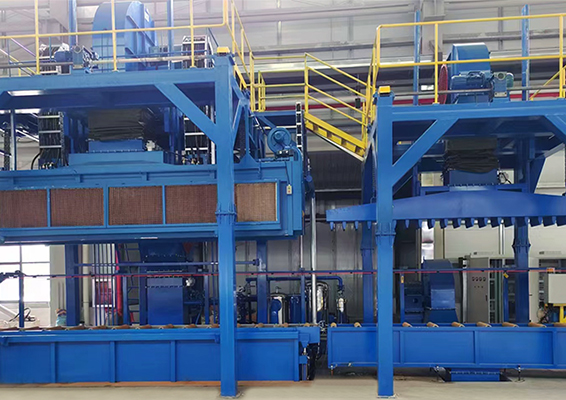
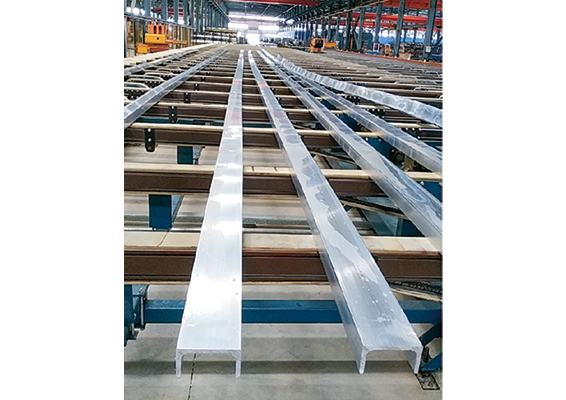
To eliminate these inefficiencies, Jianeng Jingjin delivers a continuous extrusion inline quenching system that executes rapid cooling directly at the extrusion press exit. Perfectly compatible with various extrusion presses ranging from 1000T to 3600T, this quenching system instantly locks the solid solution state of alloying elements through controlled thermal extraction. It drastically enhances the mechanical and tensile properties of the metal, shortens product handling lead times, and significantly cuts operational costs. It is the ultimate choice for large-scale, industrial-grade profiles with highly complex cross-sections.
- As profiles exit the extrusion press, our intelligent quenching platform dynamically deploys distinct, optimized cooling recipes based on the specific cross-section geometry, alloy metallurgy and target mechanical properties. This specialized handling achieves balanced, stress-free cooling across the entire aluminum profile length.
- The cooling nozzles utilize advanced, progressive water quenching logic to guarantee uniform heat extraction, drastically reducing profile thermal distortion and maximizing finished yield rates.
Technical Parameters
1. Versatile Cooling Modes- Forced Air Quenching: Air velocity ≥30–50 m/s; air pressure: 2000–5000 Pa.
- Water Mist Atomization Quenching: Water flow rate: 5–15 m³/h; air pressure: 0.3–0.6 MPa.
- Water Spray Quenching: Water pressure: 0.2–0.5 MPa; Nozzle arrangement: 8–16 nozzles per meter.
- Hybrid Zoned Cooling: Features a three-stage independent control structure (Air / Water / Mist) to tailor precise cooling curves.
- Effective Process Length: 4 to 8 meters (Divided into 2 to 4 independently programmable zones)
- Applicable Profile Width: 300 to 1200 mm
- Wall Thickness Range: 1 to 25 mm
- Process Cooling Water: Regulated at 20–40°C via constant-temperature filtration systems.
- Water Quality: Requires deionized or softened water to eliminate scaling and prevent nozzle clogging.
- Compressed Air Supply: Must be strictly purified, filtered, and dried (100% oil-free and moisture-free).
- Conveyor Synchronization Velocity: 5 to 30 m/min, completely slaved to the linear output speed of the extrusion line.
- Roller Bed Dimensions: Roller pitch spaced at 400–600 mm; heavy-gauge roller diameter: φ80–120 mm.
- Motorized Gap Adjustments: Vertical upper air/water gap clearance is electrically adjustable from 100 mm to 500 mm.
- Profile Centering Guides: Specialized side-guiding wheels available in manual or automated self-centering setups.
- Central Control Architecture: Industrial PLC + User-friendly touch HMI capable of storing 20 to 50 distinct alloy recipe datasets.
- Closed-Loop Regulation: Provides real-time closed-loop tuning for air velocity, water pressure, flow rates, and solution temperatures.
- Safety & System Alarm: Full linkage with the extrusion press and puller, featuring automated fault diagnostics for over-temperature, low water levels, and drop-in pressure conditions.
Foshan Jianeng Jingjin Technology Co., Ltd.
Add.: Jingfu Industrial Park, Leping Town, Sanshui District, Foshan City.
Contact Person: Rhea
Tel: +86-18029203666
WhatsApp: +86-18029203666
Email: jianengmachine@gmail.com


